
Capabilities
Tube chassis design and digitizing
3D scanning, then chassis digitizing and design, then CAD modeling. An existing chassis is captured and turned into a working model, or a new one is designed from the ground up.
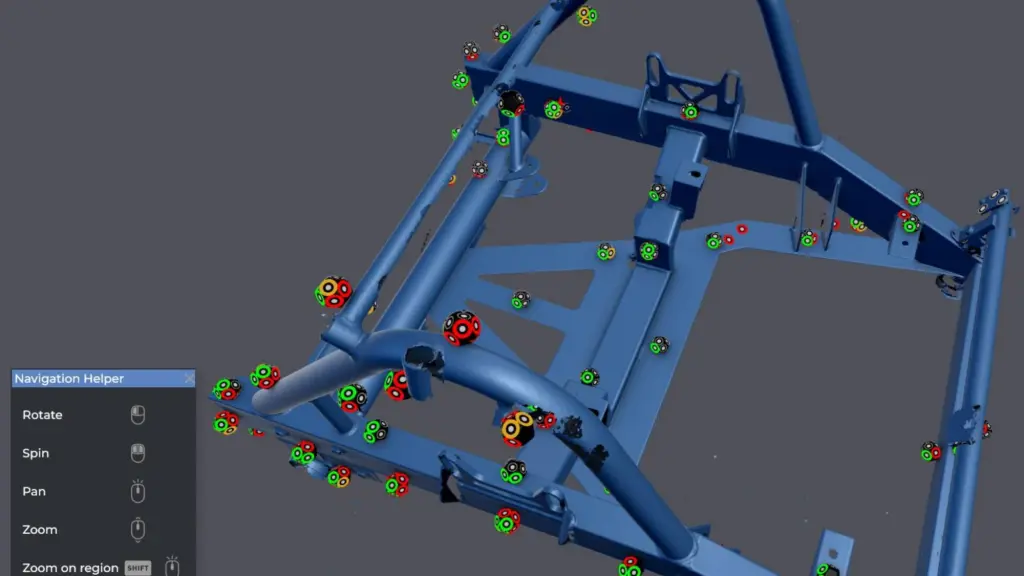
Tube chassis work runs in both directions: designing a chassis from scratch, and digitizing one that already exists.
Digitizing suits the chassis that was built by hand, changed over several seasons and never documented. It exists only as the object itself. Once it is a model, it can be repaired, altered or built again without measuring everything from nothing.
Designing from scratch is the same problem in reverse. The geometry is resolved on screen, where a change costs minutes, rather than on the bench, where it costs a length of tube.
The bends, the notches and the joints all have to agree with each other. Because the model is built by the people who will cut from it, the questions that matter are settled while they are still easy to settle: where joints land, how they are notched, and whether a bend can actually be made.
Models are prepared so they can drive the tube bending directly, without being redrawn or re-entered by hand along the way.
Design changes are handled in-house. A revision means editing the model, not reopening a conversation with somebody else and waiting for a slot.
Tube chassis design runs alongside the rest of the chain rather than apart from it. An existing chassis is captured by 3D scanning, rebuilt through CAD modeling, and the finished model drives CNC tube bending and notching directly.
Most tube chassis design here is for motorsports, off-road, SXS and UTV work, where the same chassis is repaired, revised and rebuilt over several seasons. Once it exists as a model, each of those is an edit rather than a fresh set of measurements.
What tube chassis design and digitizing includes
- 3D scanning
- Chassis digitizing and design
- CAD modeling
- Models prepared for CNC tube processing
How tube chassis design and digitizing runs
- 01 3D scanning The existing chassis is captured where it sits, along with anything it has to work around.
- 02 Chassis digitizing and design The capture becomes dimensioned chassis geometry, and the design is worked out on it.
- 03 CAD modeling Bends, notches and joints are resolved as a model the tube bender can run from.
Common questions about tube chassis design and digitizing
Can you work from an existing chassis that was never drawn?
Yes. Digitizing is for exactly that: an existing chassis captured and turned into a model you can modify or reproduce.
Can you design a chassis from scratch?
Yes. The geometry is resolved on screen, where a change costs minutes rather than a length of tube.
Who cuts the tube once the chassis is designed?
The same shop. Tube bending and notching are done here, driven by the model itself rather than by a drawing handed to somebody else.
Why does designing and fabricating in one place matter for a chassis?
The bends, the notches and the joints all have to agree with each other. When the same shop models it and cuts it, that agreement is settled at the design stage rather than discovered at the bench.